

Shoji Paper
dünne, lichtdurchlässige, durchscheinend weiße oder naturfarbene Japanpapiere
zum Bespannen von Sprossenrahmen, Paravents und Shoji-Schiebetüren, für Kalligraphie und Tuschmalerei
Shoji papers beautifully scatter and distribute the light from lamps or fluorescent tubes, making it easy and inexpensive to create large lighting objects. Despite their high translucency, Shoji papers are largely opaque.
Shoji papers are glued to wooden frames with paste and then slightly moistened. They then tighten by themselves as they dry.


AMA Flax Fleece F130
For covering Shoji screens, for covering cabinet doors and as a natural wall covering: Fleece made of 65% flax (linen fiber) and 35% viscose
incl. VAT
plus shipping costs
Delivery time: 3-5 days
Produkt enthält: 5,5 m² – 55 m²


Shojipapier TS102 Ichimatsu
Shoji paper TS102 Ichimatsu pure white with checkerboard pattern, highly translucent, for covering lattice frames, screens and Shoji sliding doors
incl. VAT
plus shipping costs
Delivery time: 3-5 days
Produkt enthält: 0,57 m² – 3,38 m²

Shojipapier TS103 Seigaiha
Shoji paper TS103 Seigaiha pure white with wave pattern, highly translucent, for covering lattice frames, screens and Shoji sliding doors
incl. VAT
plus shipping costs
Delivery time: 3-5 days
Produkt enthält: 0,57 m² – 3,39 m²


Shoji paper N120 muji wide format
HABAHIRO Muji N120 Shoji paper pure white 135 cm wide
pure white, highly translucent standard shoji paper with fine texture, wide format 135 cm
MUJI N120 is one of the few Shoji papers produced in an extra-wide format of 135 cm. The addition of viscose fibers makes the paper relatively stable despite its thinness. The hemp fiber content ensures beautiful light diffusion and a lively texture.
With its generous width of 135 cm, the Shoji paper Muji N120 is particularly well-suited for wide cabinet doors.
incl. VAT
plus shipping costs
Delivery time: 3-5 days
Produkt enthält: 5,81 m²
Shoji paper N134 unryu wide format
HABAHIRO unryu N134 Shoji paper white with fiber structure 135 cm wide
Pure white, highly translucent standard Shoji paper with fiber structure, wide format 135 cm
MUJI N134 is one of the few Shoji papers that are manufactured in the extra-wide format of 135 cm. The addition of viscose fibers makes the paper relatively stable despite its thinness. The hemp fiber content ensures beautiful light diffusion and a lively structure.
With its large width of 135 cm, the Shoji paper Unryu N134 is also suitable for wide cabinet doors.
incl. VAT
plus shipping costs
Delivery time: 3-5 days
Produkt enthält: 5,81 m²


MINO Japanese Paper MI41-3
MINO WASHI 41-3, 90 g/m²
Very strong paper made from pure natural fibers: 100% Manila hemp (Asa Unryu)
incl. VAT
plus shipping costs
Delivery time: 3-5 days
Produkt enthält: 0,25 m² – 9,4 m²


Shoji Paper AT21 Muji
lieferbar ab:03.09.2026Shoji paper AT21 Muji pure white with fine texture, highly translucent, for covering lattice frames, screens and sliding shoji doors
Roll 94 cm x 7.20 m
incl. VAT
plus shipping costs
Delivery time: 3-5 days
Produkt enthält: 6,77 m²


Shoji Paper KOZO Mukashinagara
Shojipapier kozo "mukashi nagara" unryu, 94 cm breit
Shoji paper natural white, expressive fiber structure
natural-colored shoji paper made from kozo mulberry fibers
incl. VAT
plus shipping costs
Delivery time: 3-5 days
Produkt enthält: 0,95 m² – 57 m²
Shoji Paper Kozo Unryu S132
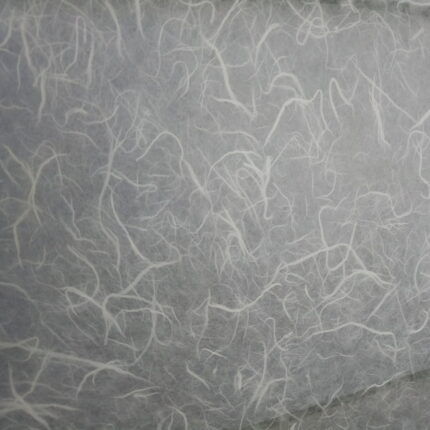
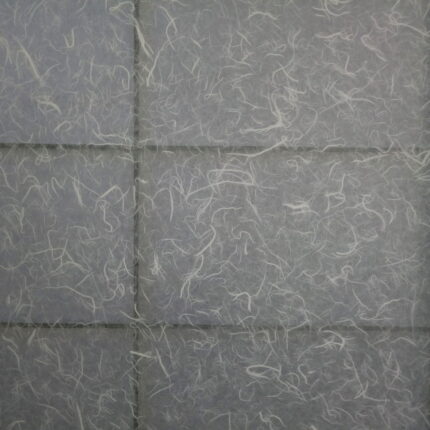
S132 Shoji paper KOZO Unryu 100% mulberry fiber
Shoji paper natural white, highly transparent, strong fiber structure
incl. VAT
plus shipping costs
Delivery time: 3-5 days
Produkt enthält: 0,6 m²


Shojipapier TAF TOP Muji
Taf Top Shoji paper extra tear-resistant, with fine structure, for extra stable coverings, especially for Shoji with very large individual surfaces and without center stile
incl. VAT
plus shipping costs
Delivery time: 3-5 days
Produkt enthält: 14,33 m² – 40,5 m²


Shoji Paper TAF TOP Unryu
Extra tear-resistant Shoji paper, with fiber structure, for extra stable coverings, especially for Shoji with very large individual surfaces and without center stile
incl. VAT
plus shipping costs
Delivery time: 3-5 days
Produkt enthält: 40,5 m²
Shoji papers are optimized for maximum translucency, low transparency, and thinness. Therefore, with a few exceptions, they are white or natural white and very thin (40-60 g/m²). Other properties of Shoji paper include high tear resistance even when wet, as well as dimensional stability even with strong changes in temperature and humidity.
All Shoji papers have one smooth side and one slightly rougher side. When covering a Shoji screen, the smooth side is usually glued to the frame. This is also the outside of the Shoji paper rolls.
Processing
Shoji papers are glued on with starch-based adhesive (Shoji-Nori) or cellulose paste. Both adhesives are purely natural and can be dissolved again by moistening. This is important if the paper needs to be replaced. A prerequisite for this is that the wood surfaces are not varnished or oiled; otherwise, double-sided tape should be used.
After gluing, the Shoji paper is slightly moistened. It tightens by itself as it dries.
Shoji papers can be differentiated according to the following criteria:
Composition
- Papers made from 100% natural fiber (mulberry or hemp), very high quality
- Papers made from 70-100% pulp (wood pulp), with additives of synthetic fibers (viscose, polyester), very inexpensive
- Papers made from 50-60% pulp, with a high proportion of synthetic fibers, very tear-resistant
- Papers made from 80-100% synthetic fiber, very tear-resistant, very low paper thickness possible
Formats
- 25-28 cm width, roll length approx. 20 m. 25 cm wide is the hanshi format, 28 cm the minohan format. The paper width corresponds to the vertical bar spacing plus twice the bar width. The paper is glued in strips from bottom to top so that the overlap lies on a bar.
- 69 cm width, roll length 7.20 m. For narrow Shoji doors
- 93-95 cm width, roll lengths depending on the type: 3.60 m, 7.20 m, 10 m, 15 m, 30 m, 50 m, 60 m. This is the Ichimaibari format. Ichimaibari translates as: “cover with one sheet”. The width is based on the standard format of the Japanese sliding door, which is usually about 90 cm wide.
Structures
- muji means “without pattern”. These papers have a very fine structure.
- unryu means “cloud dragon”. These papers have a more or less pronounced fiber structure.
Patterns
Some Shoji papers have patterns that appear dark in backlight. These patterns are basically watermarks: the paper is thicker here. Typical are traditional Japanese ornaments, such as pine branches, bamboo or maple leaves.