
Many Japanese papers are particularly suitable for covering frame constructions.
Japanese covering papers always contain long fibers such as Manila hemp fibers, kozo (mulberry fibers) or synthetic fibers such as polyester or viscose. This is why even very thin Japanese papers are relatively tough and tear-resistant in relation to their grammage.
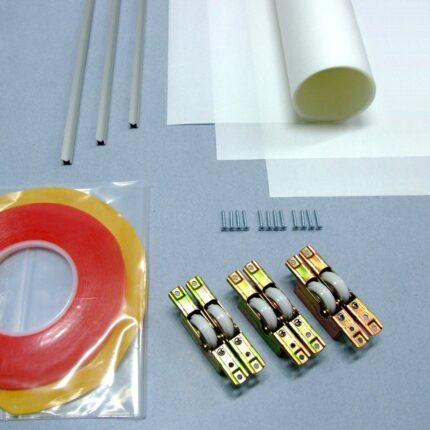
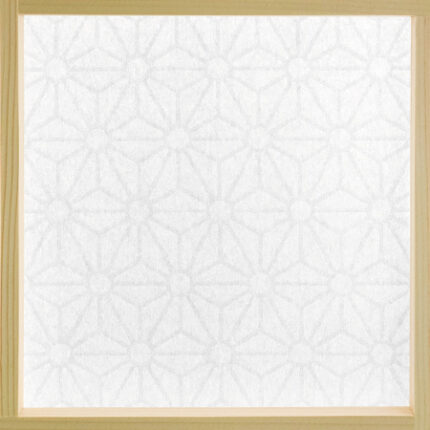
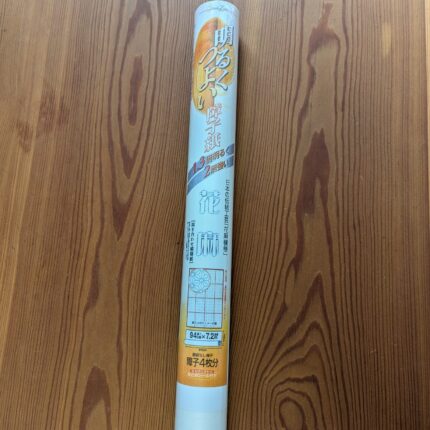
ASANOHA Shoji Paper
Shoji paper AT28 Asanoha pure white with star pattern, highly translucent, for covering lattice frames, screens and shoji sliding doors
plus shipping costs
Delivery time: 3-5 days
Product contains: 0.57 m² – 6.77 m²

MADOCA SHIMA MW03
MADOCA SHIMA MW03
White, tear-resistant Japanese paper with a striped pattern and Unryu fiber structure
plus shipping costs
Delivery time: 3-5 days
Product contains: 0.58 m² – 9.5 m²

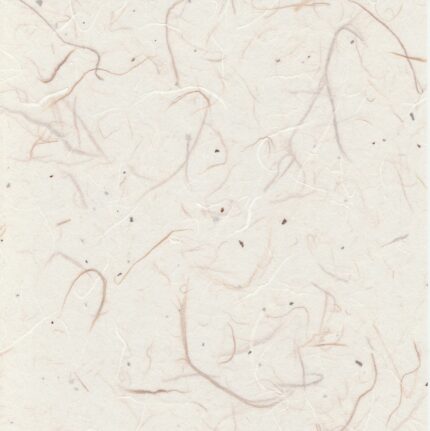
MADOCA KOZO UNRYU MK02
MADOCA KOZO MADARA UNRYU MK02
Natural-colored, tear-resistant Japanese paper made from 100% natural fibers
Natural mulberry fiber structure
for panel curtains, lights, Shoji, calligraphy
plus shipping costs
Delivery time: 3-5 days
Product contains: 2.33 m² – 9.5 m²

Shoji Screen Kit 1
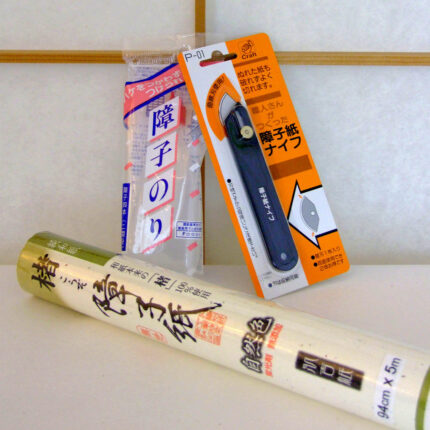
Shoji Screen Kit, Natural 1
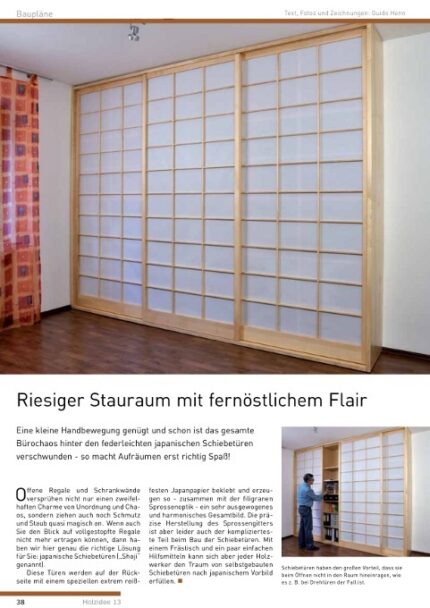
Shoji papers are mainly used to cover Japanese sliding frames, but also other objects such as lampshades and screens.
With grammages of between 40 and 60 g/m², shoji papers are thicker and more robust than paper for model making.
Covering papers for aircraft models and Japanese papers for restorations
are even thinner with grammages of 10 to 21 g/m². They consist entirely or predominantly of very long plant fibers such as abaca (Manila hemp) or contain synthetic fibers such as polyester and polypropylene.
The process of covering frames and racks with plain Japanese paper
is always the same regardless of the fiber blend and grammage: The dry paper is glued on with paste or starch adhesive and slightly moistened after the adhesive joint has been tightened. The paper stretches as it dries.
Japanese paper composites are materials made from several layers of paper and plastic film.
These composite materials such as SAICO Sheets, MADOCA and MADOCA PP are extremely robust thanks to the plastic middle layers. MADOCA PP and SAICO Sheets are even washable thanks to a plastic coating on the surface.